Thyroid Function in Metabolic Balance
Published February 2026 | Educational Resource
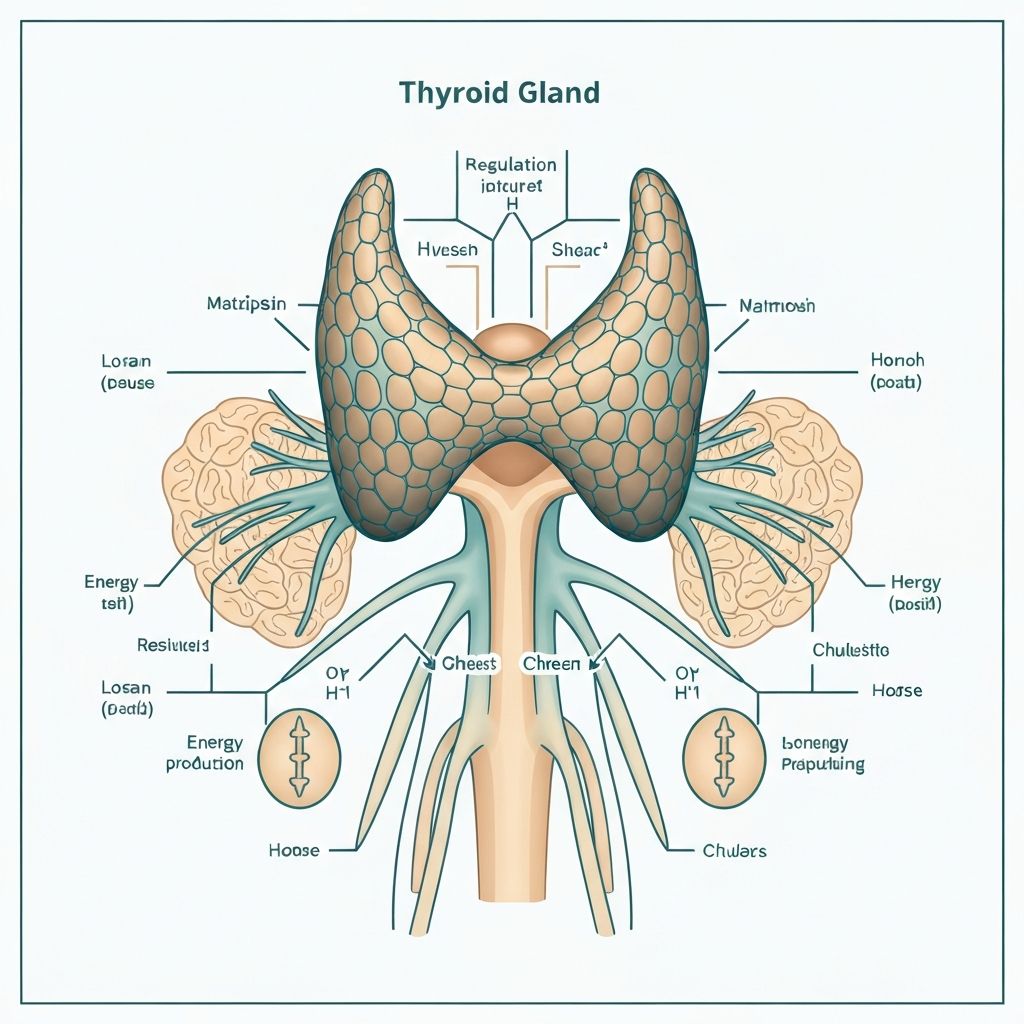
Thyroid Hormones and Metabolism
The thyroid gland produces hormones that regulate metabolic rate throughout the body. The primary thyroid hormones are thyroxine (T4) and triiodothyronine (T3). T3 is the more biologically active form, though T4 is produced in greater quantities and is converted to T3 in peripheral tissues.
Metabolic Rate Regulation
Thyroid hormones influence virtually every cell in the body, affecting how quickly cells use energy and produce heat. They regulate basal metabolic rate, the energy expenditure required for basic physiological functions at rest. Higher thyroid hormone levels generally increase metabolic rate, while lower levels decrease it.
This regulation occurs through multiple mechanisms. Thyroid hormones increase oxygen consumption in tissues, enhance mitochondrial activity, and affect the expression of genes involved in energy metabolism. They also influence protein synthesis, carbohydrate metabolism, and fat breakdown.
Adaptive Thyroid Responses
Thyroid function adapts to changes in energy availability. When energy intake decreases, the conversion of T4 to active T3 declines, while conversion to inactive reverse T3 increases. This adaptive response reduces metabolic rate, conserving energy during periods of perceived scarcity.
These changes can occur relatively quickly. Within days of reduced energy intake, T3 levels may begin to decline. The magnitude of the decrease relates to the degree and duration of energy restriction. In some individuals, T3 levels may decrease substantially even with moderate reductions in energy intake.
Long-Term Adaptations
Following significant weight loss, thyroid hormone levels may remain suppressed for extended periods. Studies have documented continued reductions in T3 levels months or even years after weight loss, contributing to persistent decreases in metabolic rate. This sustained suppression may represent the body's attempt to restore lost weight.
Thyroid and Energy Balance
The relationship between thyroid function and body weight is bidirectional. Thyroid hormones influence energy expenditure and therefore affect energy balance. Conversely, changes in energy balance and body weight influence thyroid hormone production and conversion.
Individuals with thyroid disorders demonstrate the importance of these hormones in weight regulation. Hypothyroidism, characterized by insufficient thyroid hormone production, typically leads to weight gain and reduced energy expenditure. Hyperthyroidism, with excessive thyroid hormone, often causes weight loss and increased energy expenditure.
Individual Variation
Considerable variation exists in baseline thyroid function among individuals with normal thyroid glands. Some people naturally have higher or lower thyroid hormone levels within the normal range. These differences contribute to variation in metabolic rate and potentially to differences in defended body weight.
The magnitude of adaptive thyroid responses to energy restriction also varies. Some individuals exhibit pronounced decreases in T3 with energy deficit, while others show more modest changes. These differences may help explain why some people experience greater metabolic adaptation than others.
Thyroid Regulation
Thyroid hormone production is controlled by the hypothalamic-pituitary-thyroid axis. The hypothalamus secretes thyrotropin-releasing hormone (TRH), which stimulates the pituitary gland to release thyroid-stimulating hormone (TSH). TSH then signals the thyroid gland to produce T4 and T3.
This system operates through negative feedback. When thyroid hormone levels are adequate, they suppress TRH and TSH secretion. When levels are low, TRH and TSH increase to stimulate more thyroid hormone production. Changes in energy balance can affect this regulatory axis at multiple levels.
Limitations and Context
This article provides educational information about thyroid function in metabolism. It does not address thyroid disorders or provide guidance for managing thyroid conditions. Individuals with concerns about thyroid function should consult qualified healthcare professionals. Thyroid testing and interpretation require professional medical evaluation.